
Who Does the SAVE America Act Actually Save?
After years of working on election security in the Senate, I know what actually strengthens American elections. The SAVE America Act does the opposite.

When I started The Messina Memo, I did so not just to share my own thoughts–but also those of the incredibly smart people I work with. The Messina Group (TMG), which I founded in 2013 and have built alongside my incredible partners, is full of them–smart people who care deeply about democracy and how it works. Today, for the first time on Substack, I’m bringing one in.
Lindsey Kerr is a Partner at TMG and one of the sharpest minds I know on elections and democratic institutions–she served as Chief of Staff to Senator Amy Klobuchar and as Staff Director and Chief Counsel of the Senate Rules Committee. She was in the room for some of the most consequential fights over election security in the last decade. When Lindsey has something to say about how we protect the vote, I think you should hear it. It also happens to be Election Day in Illinois, making this message even more prescient. – Jim
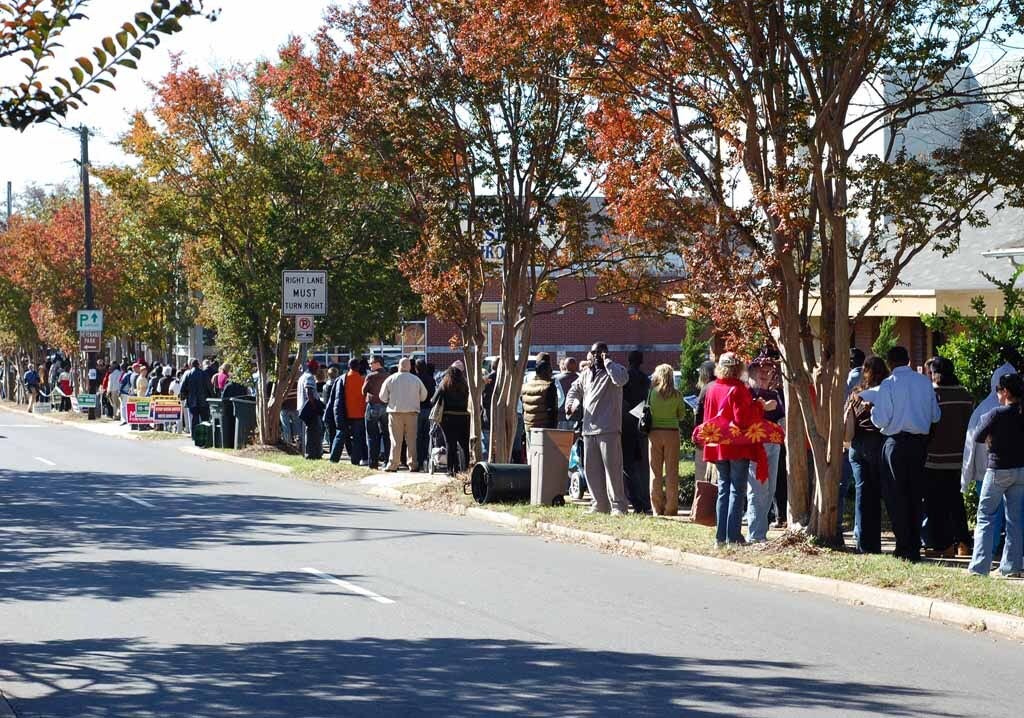
Congress exists to pass laws that make people’s lives better. That is the basic bargain of democracy. Citizens elect representatives. Representatives govern with the public good in mind.
Right now, the party that controls Washington is urgently pushing a bill through Congress called the Safeguard American Voter Eligibility Act, or SAVE America Act. The President of the United States has said he will not sign other legislation until this bill reaches his desk. He has urged Republicans to scrap the Senate filibuster—a more than 200-year-old Senate tradition that allows extended debate and often requires broad consensus for major legislation—if that is what it takes to pass the bill. All of this is happening while the government is in a partial shutdown, leaving the Department of Homeland Security unfunded in the middle of a war with Iran. If Washington is willing to bring everything else to a halt to force this bill through, it must be a very high priority.
So it is worth pausing to ask a plain question: Who is it helping? And what, exactly, are we saving?
The SAVE America Act would require Americans to present photo ID and documentary proof of citizenship to vote in federal elections. Not just a driver’s license. Proof you are an American. It would impose additional restrictions on voting, including limits on mail-in ballots. Voting by mail dates back to the Civil War, when states allowed soldiers to cast ballots from the battlefield, and it has since helped millions of elderly voters, people with disabilities, students, and military service members stationed away from home participate in elections. All of this purportedly in the name of safeguarding elections.
I know firsthand what it takes to safeguard American elections from my time as Chief Counsel and Staff Director of the Senate Rules Committee, which has primary jurisdiction over federal elections.
In 2016, Vladimir Putin and his Russian intelligence apparatus conducted a sophisticated, coordinated campaign to interfere in America’s presidential election. It was a brazen and illegal assault on our democratic system, and it forced us to confront a hard truth: the infrastructure behind American elections needed to be stronger. Voting machines were more than a decade old. The software was outdated. Federal funding was abysmal. At one point, we noted that the federal government spent more money on military bands than on protecting the systems Americans use to vote.
In the aftermath of 2016, I worked with my then-boss, Senator Amy Klobuchar, to develop practical proposals to help states modernize and protect their election systems. The effort was bipartisan: Senator James Lankford, a conservative Republican from Oklahoma, worked closely with Senator Klobuchar to craft what became known as the Secure Elections Act. Two of the bill’s other prominent supporters might surprise you: Senators Lindsey Graham and Kamala Harris.
For Republicans, supporting the bill was seen as a political risk, even as state election officials across the country were begging Congress for the resources to protect their systems. We were so intent on keeping the effort bipartisan that we declined Democratic co-sponsors to maintain partisan balance. In the end, Republican leadership killed the bill. One of their central arguments against the bill was that any federal role in elections would be unconstitutional interference in a responsibility the Constitution assigns to the states.
This makes the current rush to pass the SAVE America Act all the more striking. President Trump has called on Republicans to “nationalize the voting”, pressing Congress to intervene directly in election rules that have traditionally been set by the states. He argues the bill is critical to Republicans winning the midterms. It has passed the House, and a Senate vote is expected soon. Meanwhile, states are beginning to heed Trump’s call by advancing their own versions of the SAVE America Act.
The bill addresses a problem the evidence says is nearly nonexistent. There’s zero evidence that non-citizen voting is a significant issue. Multiple examinations of millions of ballots cast in recent elections have found vanishingly few cases of non-citizen voting. Election officials consistently say that the systems we have in place already make it extremely difficult for non-citizens to vote in federal elections.
Yet public perception tells a different story. Surveys consistently show that perceptions of voter fraud correlate strongly with partisanship, with Republicans far more likely than Democrats to believe fraud is common. That gap did not emerge by accident. For years, Republican leaders have sought to undermine the legitimacy of Democratic electoral victories by falsely warning that elections are vulnerable to widespread fraud, and repeated messages from political figures have shaped what Republican voters have come to believe. It is a clear example of how sustained disinformation can distort public understanding of how elections actually work.
In that context, the focus on the SAVE America Act is not surprising, even if it does little to address the vulnerabilities that actually threaten American elections.
The bill reflects a set of President Trump’s preferred electoral “security” measures: requiring documentary proof of citizenship to register and vote in federal elections, and an end to Americans’ ability to vote by mail. The practical effect would be to raise new barriers to the ballot for many eligible voters.
Ironically, the relationship between voter turnout and partisan advantage is far more complicated than many people assume. For decades, conventional wisdom held that higher turnout helped Democrats because occasional voters tend to include younger and lower-income groups that lean Democratic. But the data have repeatedly shown that turnout itself does not consistently advantage either party. In recent elections, higher turnout has benefited Republicans. Evidence from 2024 showed that newly mobilized voters leaned slightly toward Donald Trump.
In other words, restricting participation is not obviously a winning electoral strategy. What it does do is change who finds voting easiest, and who faces additional hurdles. Policies built around documentary proof requirements inevitably fall hardest on voters who are less likely to have passports or easily accessible records: lower-income Americans, married women whose names have changed, rural voters, seniors, and Native communities.
There is also a broader political context. With midterm elections approaching, framing elections as riddled with fraud creates a ready explanation if results disappoint. President Trump has repeatedly suggested that unfavorable outcomes would reflect a corrupt system. If a blue wave election emerges in 2026, that narrative is already in place. The groundwork for disputing the outcome is being laid well before a single ballot is cast.
Meanwhile, the real vulnerabilities facing American elections remain unchanged. They are the same ones we identified after 2016: Aging equipment. Cybersecurity gaps. Under-resourced election infrastructure. Disinformation. Foreign interference.
Nearly a decade later, those are still the problems that matter most. The SAVE America Act does nothing to address a single one of them.
Which brings us back to the basic questions any serious piece of legislation–particularly one now being used to block all other legislative business during a partial government shutdown–should answer:
What problem does it solve?
Who does it help?
And who bears the cost?
On the SAVE America Act, the answers are not reassuring.
If a law makes voting harder without making elections safer, it isn’t protecting democracy.
It’s protecting something else.
 | A guest post by
|